- Home
- Help Center
- Humidity and your door
Gulf Coast Humidity and Your Garage Door
By Marvin Driscoll · Garage Door Guides Editor · Updated September 2026 · 6 min read
Houston's air averages around 75 percent relative humidity and delivers some fifty inches of rain a year, and a garage door is a wall of steel, bearings and seals standing in that weather for decades. Here is where the moisture actually bites, part by part, and what resists it.
In this guide
Questions it does not answer? Call (346) 458-9100, any hour.
Humidity attacks the door's steel first: springs pit and lose cycles, cables fray at the bottom brackets, rollers and hinges corrode and chatter. The countermeasures are cheap and specific: galvanized or coated springs and cables, sealed nylon rollers, an annual lubrication, and fresh perimeter seals that keep the wet air moving past the hardware rather than sitting on it.
The steel casualties
Springs take the worst of it: constant damp pits the coil surface, pits become stress risers, and springs retire well short of their rated cycles, which is why Gulf Coast spring work runs ahead of national schedules. Cables fail at their lowest point, the bottom brackets, where splash and condensation sit; fraying strands there are Houston's most common cable finding. Rollers, hinges and bearings corrode into the squeal-and-grind soundtrack of an unmaintained coastal door.
None of this is exotic, and all of it is visible early to anyone who looks at the bottom two feet of the door once a season.
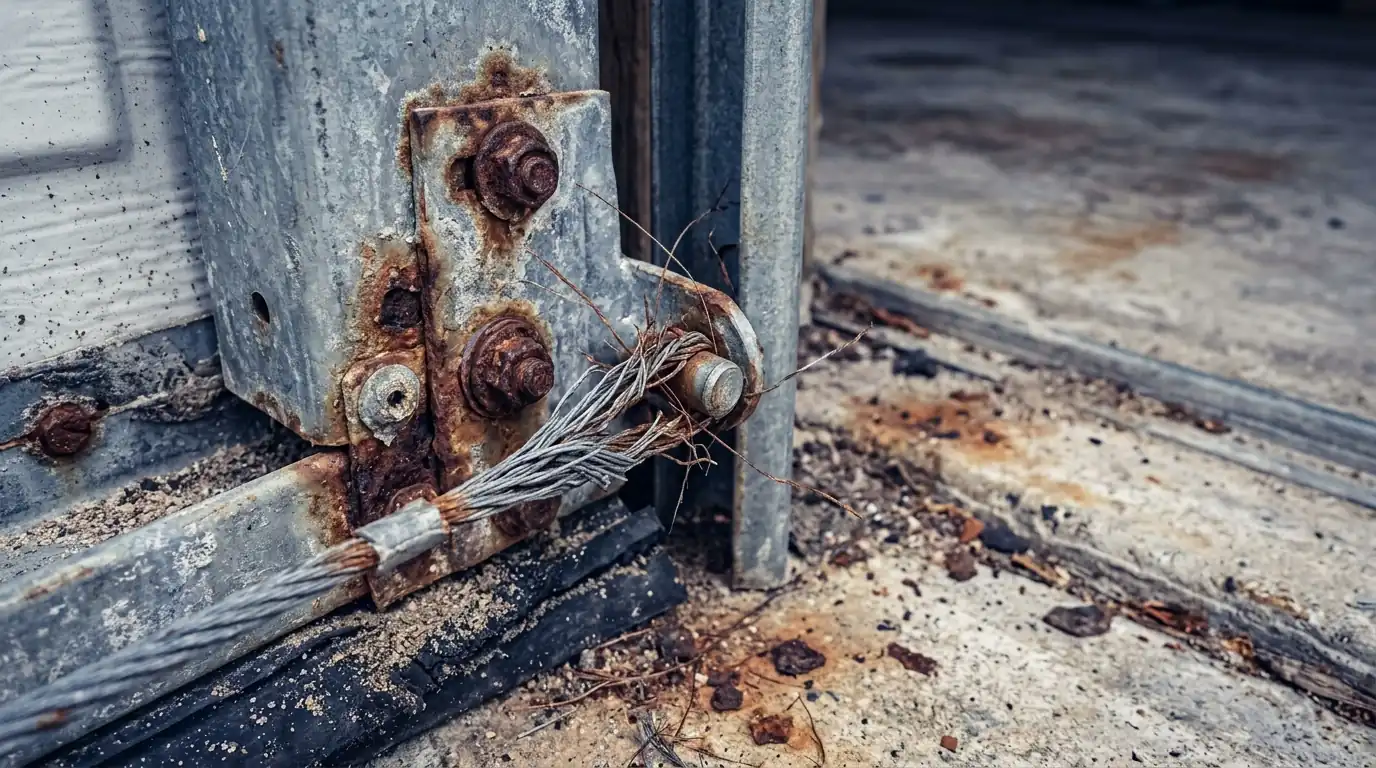
Wood, steel skins and seals
Wood doors answer humidity by moving: swelling through wet months, binding in their openings, and shedding finish on the weather face, which is why wood here is a commitment to a refinishing rhythm and marine-grade coatings. Steel skins resist better but rust from the bottom edge wherever drainage and seals fail, so a torn bottom seal is not cosmetic; it is the opening move of panel rot.
Perimeter weatherstripping earns the same respect: Houston's fifty annual inches of rain arrive with wind behind them, and the seal line is what keeps that water off the hardware and out of the garage. Seals are the cheapest parts on this page and protect the most expensive ones.
The resistant build
At repair or replacement time the humidity answer costs little to specify: galvanized or coated springs, galvanized cables, sealed nylon rollers whose bearings the air never touches, stainless or coated fasteners near the coast, and factory-finished steel or low-maintenance faux-wood sections instead of site-finished wood where the look allows. All of it is standard stock on our trucks rather than premium theater.
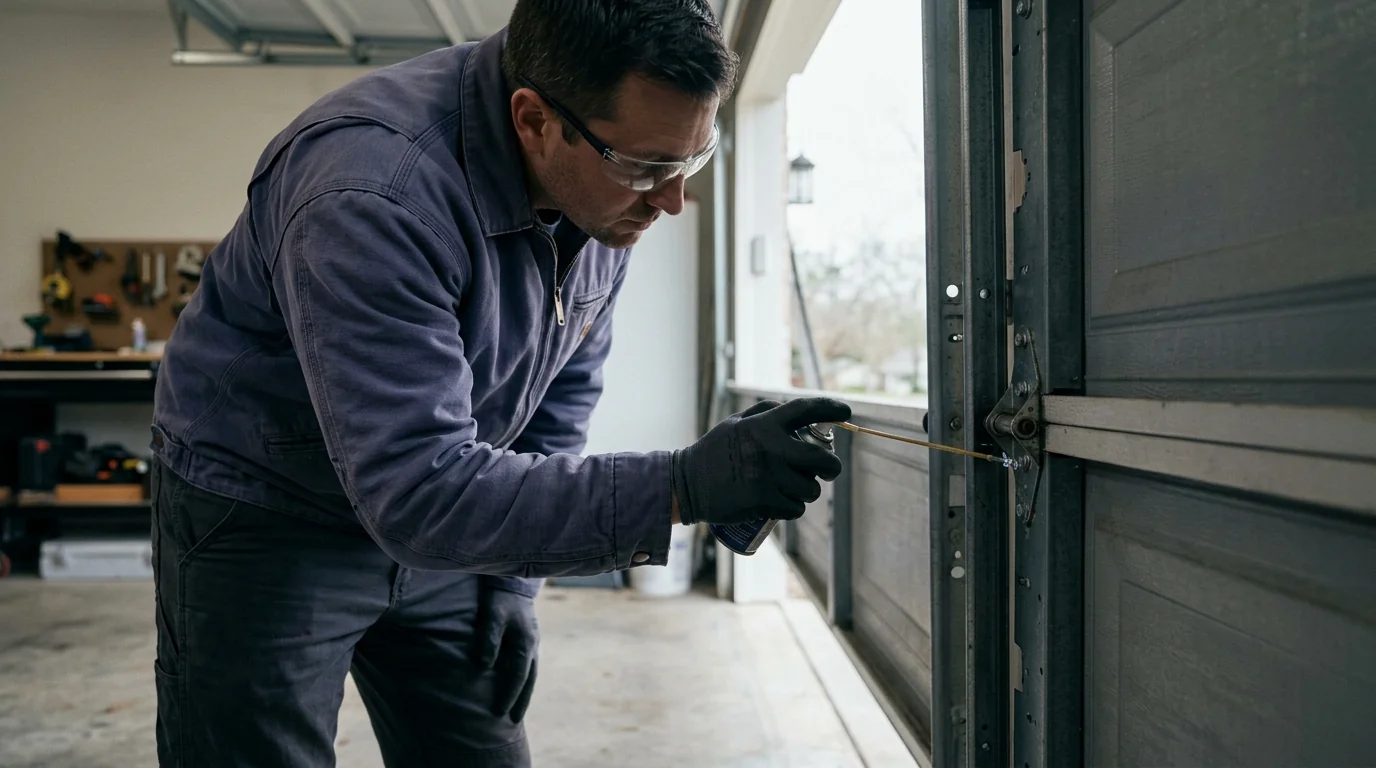
The habit that multiplies all of it: one annual service, lubrication with garage-door-grade product, a look at the bottom brackets, and a balance check. The tune-up page covers the visit; doors that get it reach old age here, and doors that do not, do not.
Keep reading
Where to go from here
Humidity sets the maintenance rhythm; these pages carry the rest of it.
Rather just ask a person?
The phone is answered 24/7. Describe the door and get a straight answer and a flat written price, no reading required.