- Home
- Help Center
- Spring warning signs
Signs Your Garage Door Springs Are About to Fail
By Marvin Driscoll · Garage Door Guides Editor · Updated April 2026 · 5 min read
Springs rarely fail without notice; they announce themselves for weeks to anyone who knows the signals. Catching one early converts a stuck-car morning into a scheduled afternoon appointment at the same price.
In this guide
Questions it does not answer? Call (346) 458-9100, any hour.
Watch for six signals: a door that feels heavy, a visible coil gap, rust and chatter on the spring, a door that opens crooked, an opener that strains or reverses, and stretched gaps in an extension spring. Any one of them is worth a call this week; the loud bang from the garage means the warning period is over.
The sounds and the feel
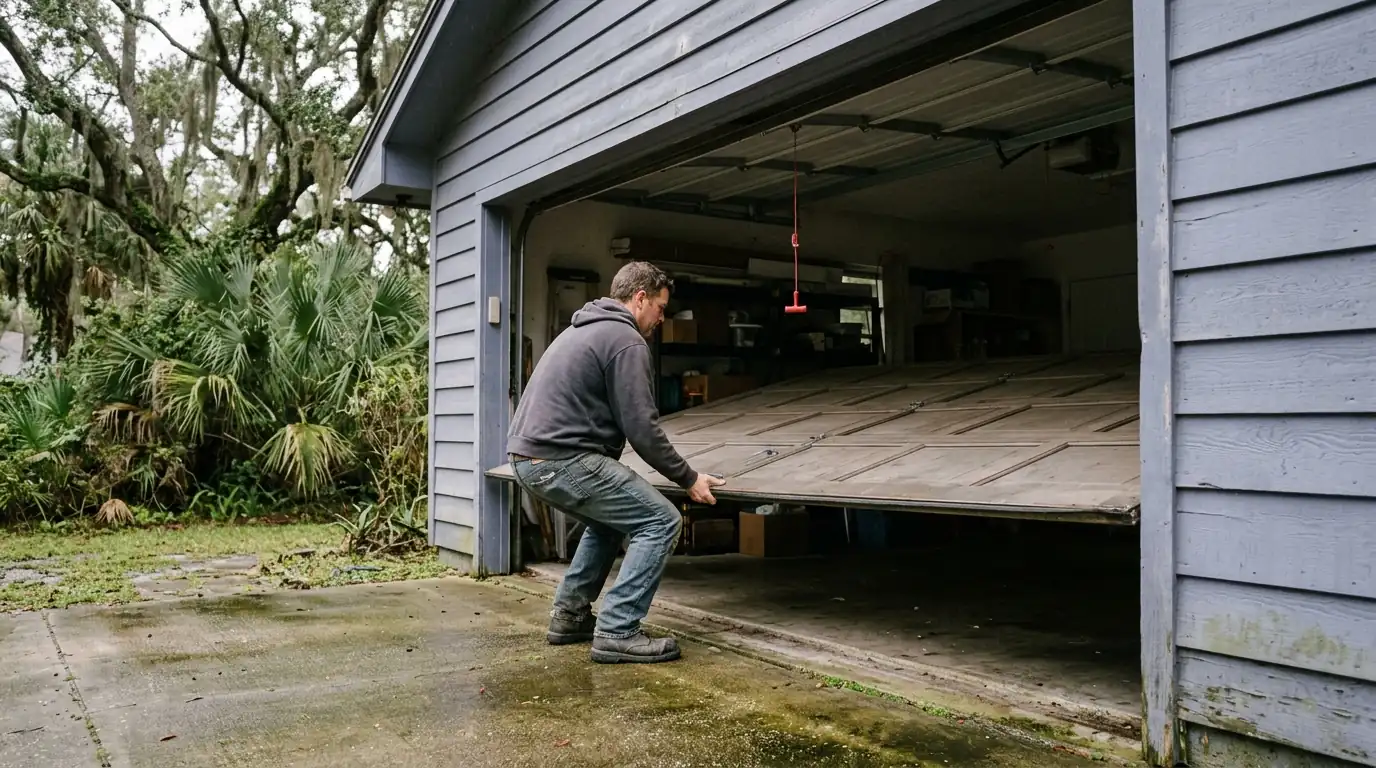
Heaviness is the earliest tell. Pull the manual release with the door closed and lift: a healthy door rises with modest effort and holds at waist height. A door that fights you, or drifts down from waist height, has springs losing their pull. Noise comes next: fresh squealing, grinding or a chattering ring from the coil as the door moves means the spring is binding against its own corrosion.
An opener that suddenly strains, slows or reverses partway is reporting the same problem secondhand, carrying weight the springs should hold. Replacing an opener for a spring problem is a common and expensive misdiagnosis.
What your eyes can confirm
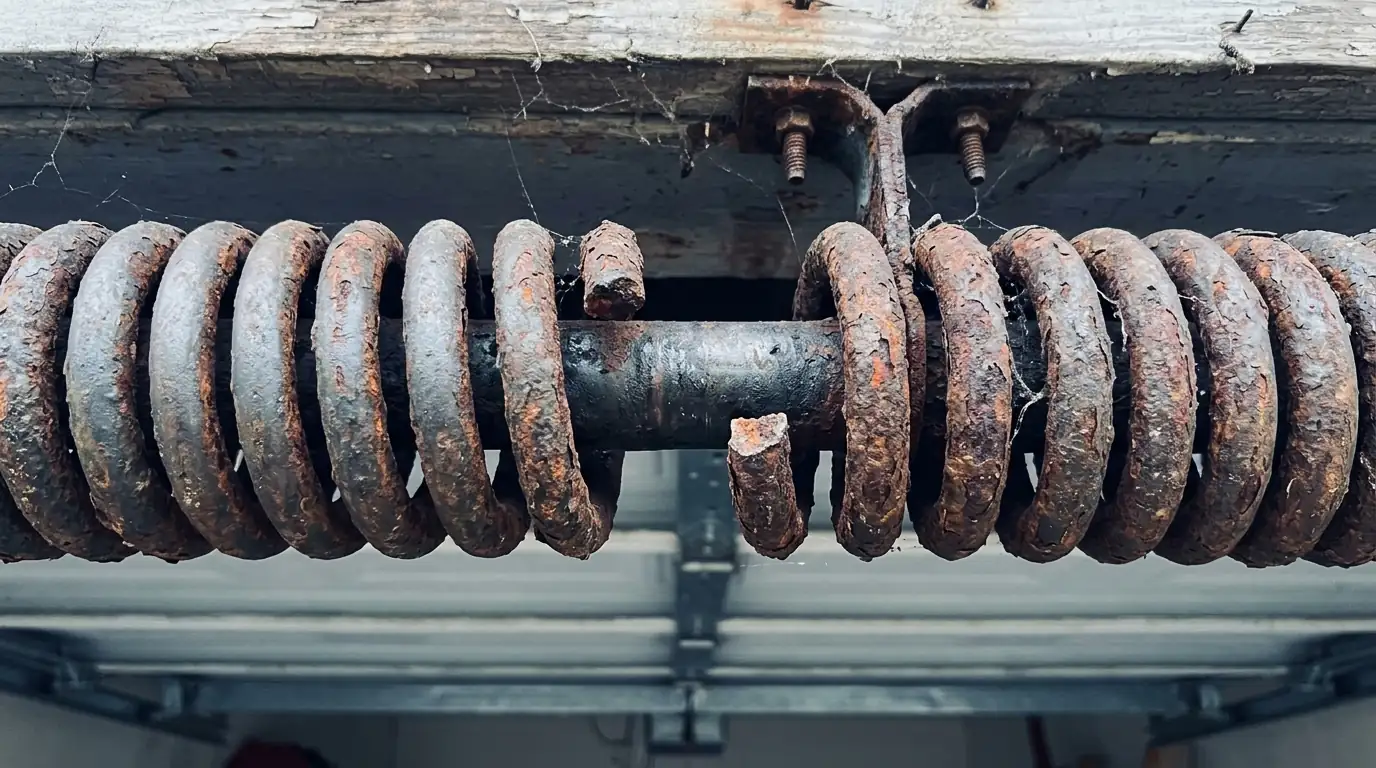
From the floor, look at the torsion spring above the door. A gap in the coil means it has already broken, no ambiguity. Short of that, heavy rust and pitting on the coil surface is Houston's 75-percent-humidity signature and the main reason local springs retire before their cycle count. A door that rises crooked, one side lagging, points at a failing spring or cable on the low side.
On older doors with extension springs along the tracks, visible stretched gaps between coils at rest are the equivalent warning, and double as the reminder to confirm safety cables run through those springs.
What the warning buys you
Acting on a warning sign means choosing your appointment instead of discovering a dead door at 7 a.m.; the price is the same either way, and the planned version adds options, like stepping up to longer-life coated springs, that panic mornings skip. It also protects the rest of the door: a spring that snaps under load frequently whips cables off drums and bends track on its way out, turning a $250 job into a $500 one.
What the warning does not buy is a safe DIY window: wound springs hold lethal tension at every stage of failure. Eyes and ears only, then the phone; the spring page and the cost guide cover what happens next.
Keep reading
Where to go from here
If a sign on this page just matched your door, these are the next reads.
Rather just ask a person?
The phone is answered 24/7. Describe the door and get a straight answer and a flat written price, no reading required.