- Home
- Door Services
- Garage Door Sensor Repair
Garage Door Sensor Repair in Houston, TX
The door starts down, flashes the opener light and climbs back up. Nine times in ten it is the two little eyes at the floor, and the fix takes minutes once someone looks at them properly.
- Misaligned photo-eyes
- Sun-blinded sensors
- Damaged sensor wiring
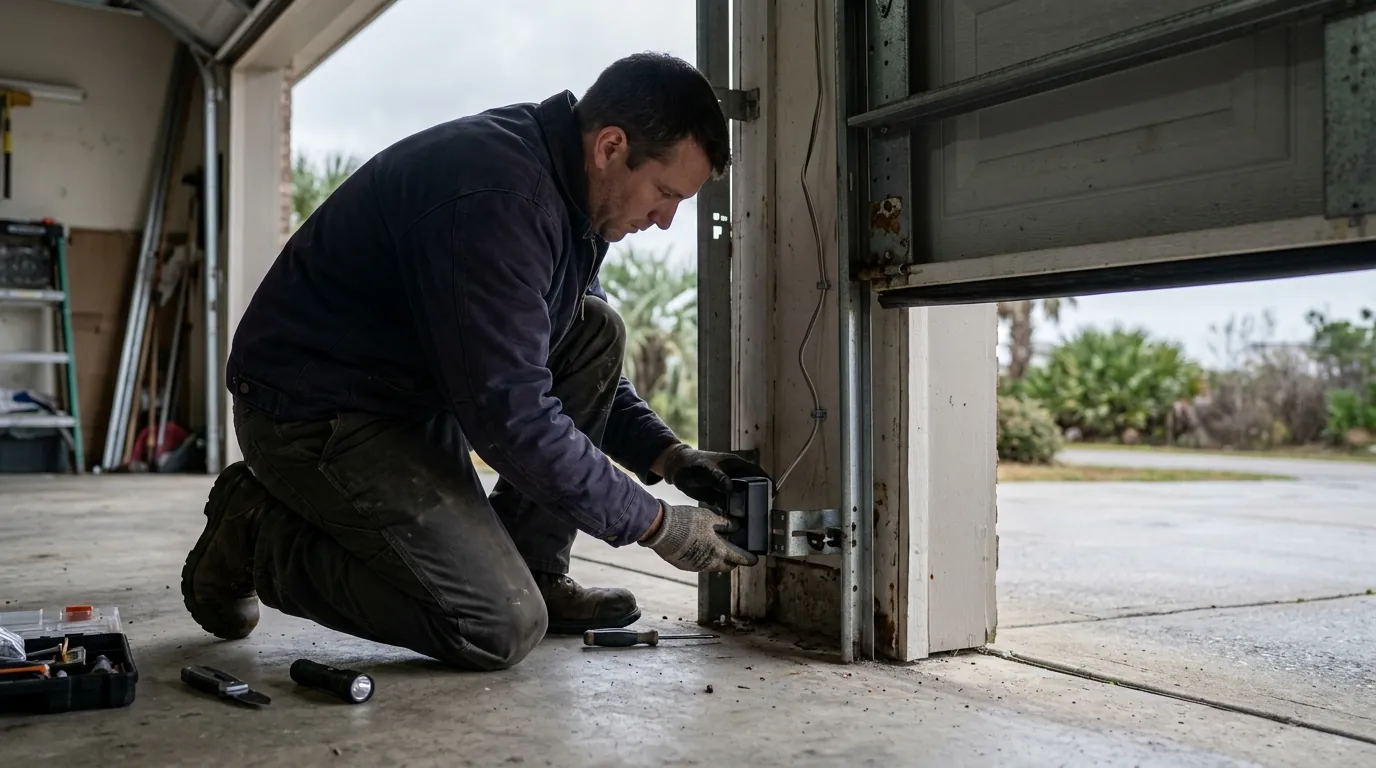
Answering 24/7. Flat written price before work starts.
Garage door won't close and the opener light is blinking? That is the safety sensor system reporting a blocked or broken beam. Most sensor repairs are alignment, cleaning or wiring and run roughly $75 to $180; a failed sensor pair is swapped from stock the same visit, and the door leaves passing its reversal test.
What this covers
Small parts with one big job
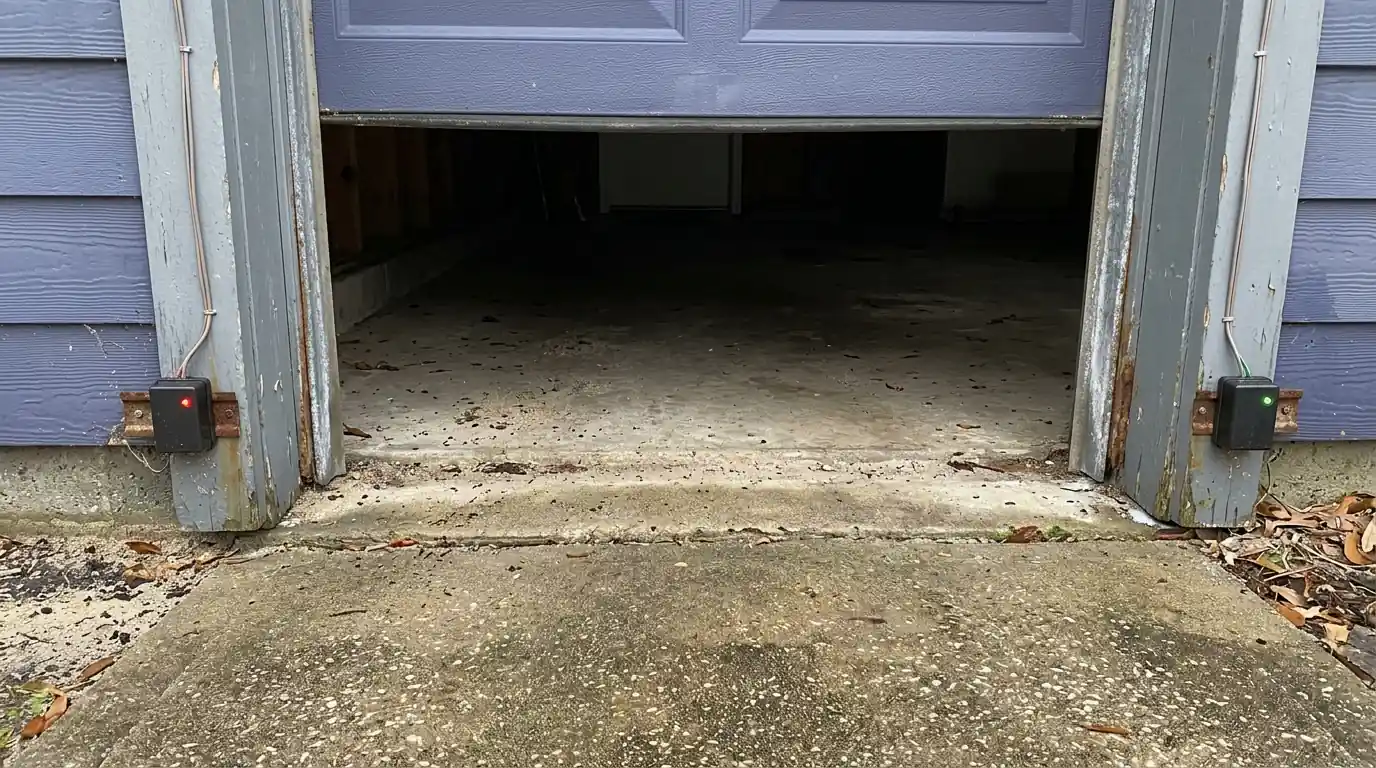
Every opener built since 1993 has to carry a photo-eye system: a sender and a receiver mounted a few inches off the floor on either side of the opening, holding an invisible beam across the doorway. Break the beam while the door is closing and the opener must stop and reverse. It is the feature that keeps a door from coming down on a child, a pet or a bumper, which is why the opener refuses to close at all when it cannot see the beam.
That refusal is what most sensor calls look like: a door that goes down a foot or two and reverses, a door that only closes while someone holds the wall button, or an opener whose light blinks a code. The cause is usually physical and small, a bracket nudged by a bin or a bike, a lens fogged with grime, a wire chewed or pinched, and occasionally a sensor that simply died after years of heat.
A proper sensor repair does not stop at getting the door to close. We find out why the beam broke, fix the cause, and then run the reversal test with an object in the path, because a door that closes but no longer reverses is worse than one that will not close.
Do not ignore these
Sensor symptoms worth a call
Door reverses after a foot or two
The classic broken-beam signal. Check for anything in the path, then alignment; if both look fine, the wiring or a sensor is the suspect.
Closes only while you hold the button
Most openers allow a held-button override when the eyes fail. Useful in a pinch, but it means the safety system is offline.
Sensor light off or flickering
A steady LED means a good beam. Dark or flickering usually means lost power to that eye: a loose terminal, cut wire or failed unit.
Works at noon, fails at sunset
Low sun shining straight into the receiver blinds it. A hood, a swapped side or a small reposition cures it.
Opener blinks a count after reversing
Many openers flash a diagnostic code for sensor faults. The count tells us where to look before we even open the toolbox.
How the visit runs
From your call to a working door
Call and describe the door
Tell us what the door is doing. Most failures have a sound and a symptom, and we can usually name the likely culprit on the phone.
Same-day dispatch
A technician heads out with springs, cables, rollers and opener parts already stocked on the truck.
Flat quote at the door
We inspect, show you the failed part, and put a flat written price in front of you before any work starts.
Repair on the spot
The common failures are fixed in one visit because the parts rode along.
Balance and safety test
The door leaves balanced, lubricated and passing its photo-eye and auto-reverse tests.
Ways this job shows up
Garage Door Sensor Repair jobs we handle
Misaligned photo-eyes
Misaligned photo-eyes get re-squared and their brackets tightened or replaced, the most common sensor fix in any Houston garage.
Sun-blinded sensors
Sun-blinded sensors get hoods, a side swap or a small move so morning and evening light stops shutting the door down.
Damaged sensor wiring
Damaged sensor wiring gets traced from eye to opener and repaired or rerun, including staples driven through the cable.
Sensor replacement and upgrade
Sensor replacement swaps a failed pair for matched units compatible with your opener, then proves them with a reversal test.
Houston conditions
Why Houston garages eat sensors
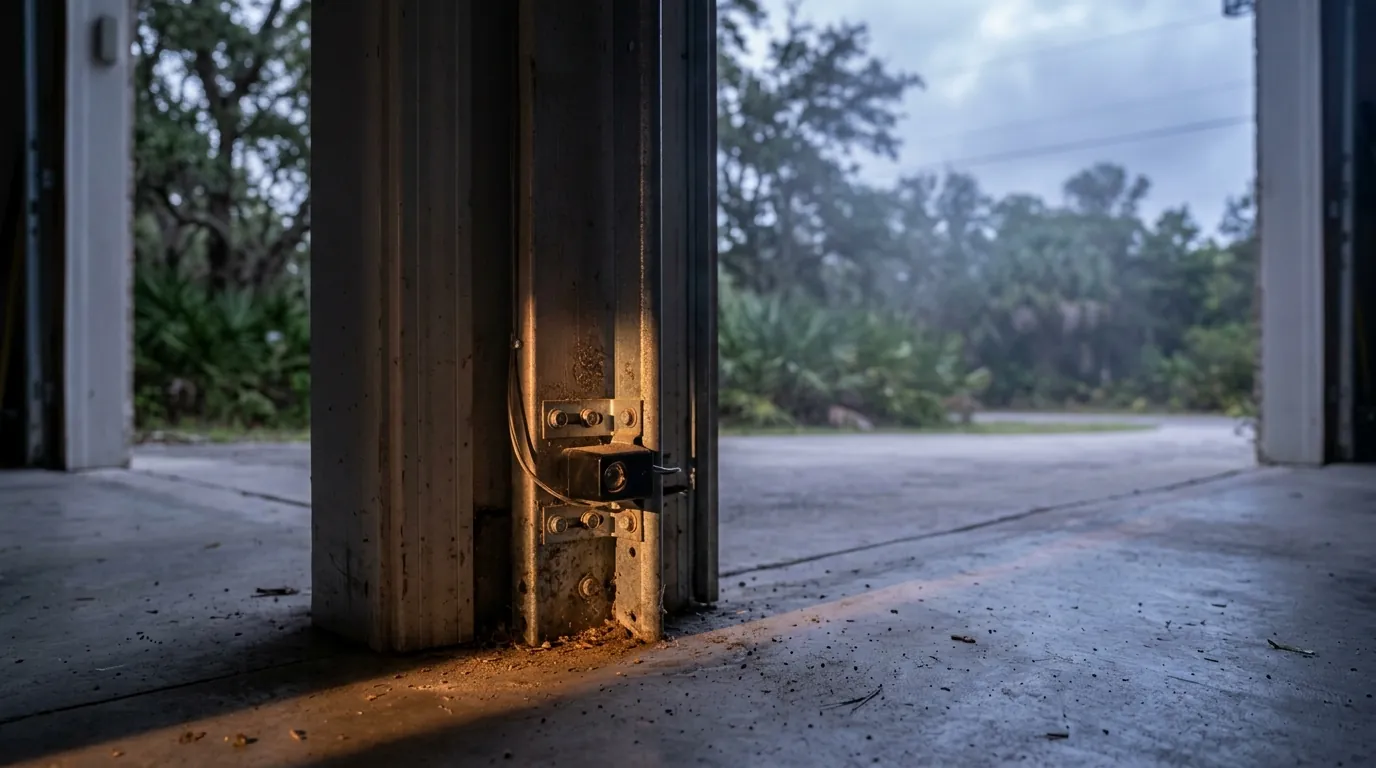
Two local habits break more photo-eyes than age does. The first is storage: Houston garages double as workshops, gyms and overflow closets, and the eyes sit exactly at bin-and-bike height. The second is the weather. Humidity around 75 percent on average condenses on lenses and corrodes terminals, and summer storm surges travel down the low-voltage wiring into both the eyes and the opener's board.
Then there is the sun. Garages facing east or west take low, direct light straight into the receiver for part of the year, which produces the maddening door that works at lunch and refuses after dinner. A small hood or swapping the sender and receiver sides usually ends it for good.
Timing
How long it takes
Most sensor repairs take 20 to 45 minutes on site: alignment and cleaning are quick, wiring runs take a little longer, and a sensor pair swap is under an hour. Every visit ends with the reversal test run in front of you.
What it costs
Sensor repair pricing
Sensor work sits at the low end of door repair. Typical ranges from national cost guides:
| Sensor alignment, cleaning and testing | $75 to $120 |
|---|---|
| Photo-eye sensor repair or replacement | $75 to $180 |
| Sensor wiring repair or rerun | $90 to $180 |
| Opener repair, typical range | $75 to $300 |
| New opener installed, for comparison | $300 to $900 |
If the real fault turns out to be the opener's board rather than the eyes, you hear that before anything is replaced, with both numbers on the table.
Straight answers
Questions about garage door sensor repair in Houston
You should not, and on modern openers you cannot without disabling the door. The eyes are required safety equipment because a closing door carries real weight; a bypassed system is how pets and children get hurt. We fix the cause instead.
Look at the small LEDs on each eye. A steady light on both usually means a good beam; a blinking or dark receiver means it cannot see the sender. A gentle nudge back into line sometimes fixes it, but a bracket that keeps drifting needs tightening or replacing.
Low sun hitting the receiver lens. It overwhelms the infrared beam for part of the day, mostly on west-facing garages. A sensor hood or swapping which side the receiver sits on solves it.
Usually yes. Eyes are sold and matched as a pair, and the survivor is the same age as the one that died. Replacing both costs little more and avoids a second visit.
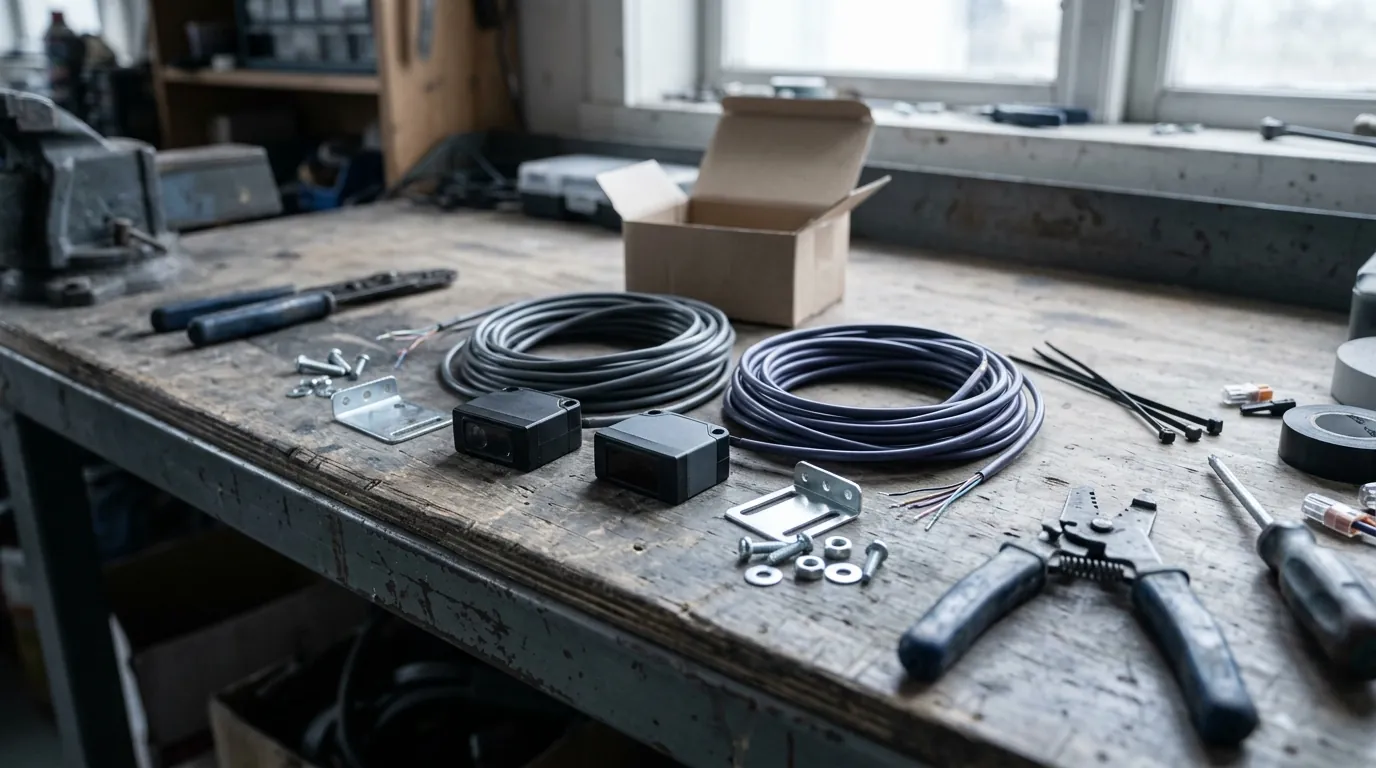
No. Sensors are matched to the opener brand and generation. We carry the common LiftMaster, Chamberlain, Craftsman and Genie-compatible pairs and confirm compatibility before installing.
Yes. Surges travel down the thin sensor wiring and can kill an eye, the opener's board or both. If the door stopped working right after a storm, we test both before replacing anything.
Not always, but it is the most common reason. Many openers flash a count that points at the sensors, the board or the limits, and reading that code is the first thing we do.
Monthly is the manufacturer advice: close the door and pass something like a broom through the beam. The door should reverse right away. Our tune-ups include the test and a lens cleaning.
Related work
Services people book alongside this one
Ready when your door is not
Calls answered 24/7 across Houston and the surrounding counties. Flat written pricing, stocked trucks, one-visit fixes for the common failures.