- Home
- Help Center
- Insulated doors
Insulated Garage Doors and the Houston Heat
By Marvin Driscoll · Garage Door Guides Editor · Updated July 2026 · 6 min read
Houston gives a garage door more than ninety days a year at 90°F or hotter, and on an attached garage every one of those afternoons leans on the wall your house shares with it. Here is what insulation actually changes, in degrees and dollars.
In this guide
- What the heat does to an uninsulated garage
- How insulated doors are built
- When the upgrade pays, and when it does not
- The supporting cast
Questions it does not answer? Call (346) 458-9100, any hour.
On an attached Houston garage, an insulated door typically keeps the space dramatically cooler on hot afternoons than a single-layer door, takes real load off the adjacent rooms' air conditioning, and runs quieter and stiffer as a bonus. The upgrade makes the most sense on attached garages that are used, and the least on a detached, rarely entered one.
What the heat does to an uninsulated garage
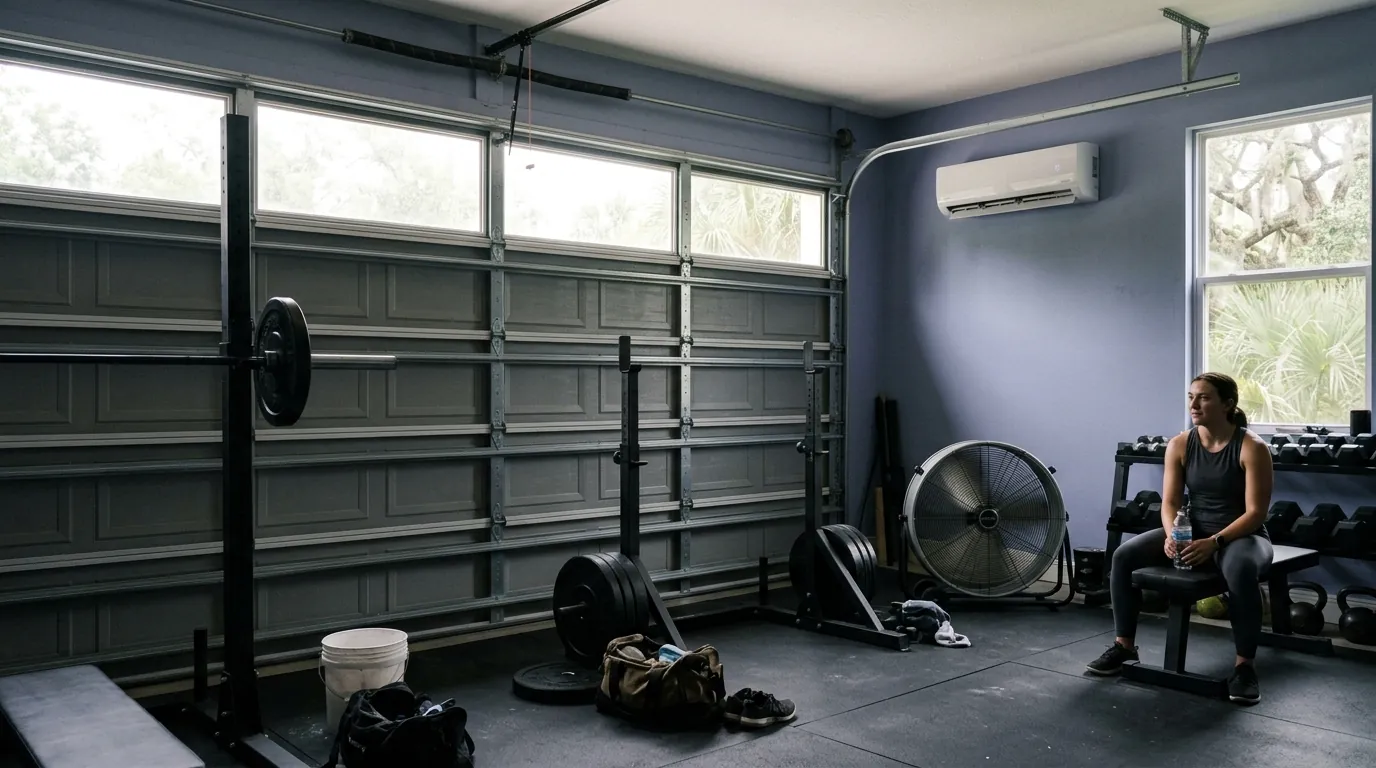
A single-layer steel door is effectively a radiator panel: it absorbs the afternoon sun, especially facing west, and re-emits it inward until the garage runs well above the outdoor temperature. With August highs sitting at 93 to 95°F, uninsulated Houston garages routinely become unusable rooms by mid-afternoon, and the wall and door they share with the house become a heat source the air conditioning fights all evening.
That is the mechanism to keep in view: the door is the garage's biggest wall, so its construction sets the room's temperature more than any other single surface.
How insulated doors are built
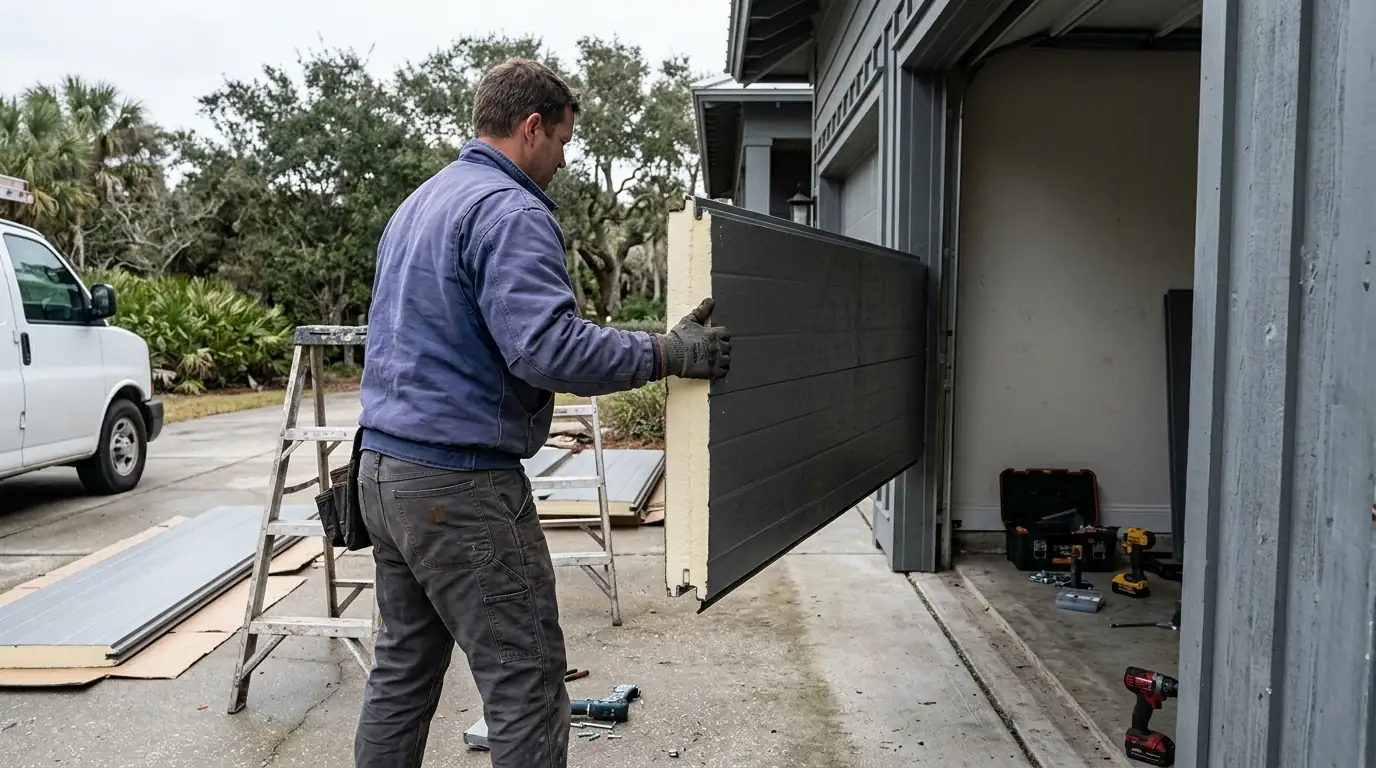
Two constructions matter. Double-layer doors back the steel skin with polystyrene panels, a solid step up at modest cost. Triple-layer sandwich doors bond two steel skins around an injected polyurethane core, delivering the highest insulation values along with a stiffness and quiet that owners notice immediately: the door stops drumming in wind and stops rattling on open.
R-value is the comparison number, and honest quotes state it; higher is better, with sandwich doors leading. The same construction pays again for impact resistance, which Houston's hail and flying-debris seasons occasionally test.
When the upgrade pays, and when it does not
Three questions settle it. Is the garage attached? If so, the insulation protects conditioned living space and its benefits run year-round. Is the garage used, as a gym, workshop, laundry route or project space? Comfort returns arrive daily. Does a bedroom sit above or beside it? Then the quiet alone can justify the sandwich door. A detached garage used for pure parking is the honest no: spend the difference elsewhere.
At replacement time the increment is at its cheapest, since installation costs the same either way; the cost guide shows where insulated models sit inside the ranges, and the insulated door page carries current options.
The supporting cast
Insulation works as a system with sealing: a fresh bottom seal and perimeter weatherstripping stop the hot-air leaks that would otherwise undercut the panels, and both are standard on our installs. For garages that double as real living space, the remaining lever is ventilation or a mini-split, but the door comes first because it is the biggest surface and the cheapest fix.
One more Houston note: insulated doors' bonded construction also shrugs off humidity-driven panel flutter better than single skins, a small durability bonus the humidity guide explains in full.
Keep reading
Where to go from here
Heat is half the Houston climate story; the other half is water in the air.
Rather just ask a person?
The phone is answered 24/7. Describe the door and get a straight answer and a flat written price, no reading required.