- Home
- Help Center
- Safety tests
Garage Door Safety Tests You Can Run This Weekend
By Marvin Driscoll · Garage Door Guides Editor · Updated June 2026 · 5 min read
Every opener made since 1993 carries two independent safety systems, and both can quietly fail for years without anyone noticing, because nobody tests them. Twenty minutes and three tests confirm the door that moves your family's heaviest machinery is still watching for them.
In this guide
Questions it does not answer? Call (346) 458-9100, any hour.
Run three tests: block the photo-eye beam while closing (the door must reverse instantly), set a 2x4 flat under the closing door (it must reverse on contact), and lift the door by hand on the manual release (it must rise easily and hold at waist height). Any failed test means adjusting or calling, not living with it.
Test one: the photo eyes
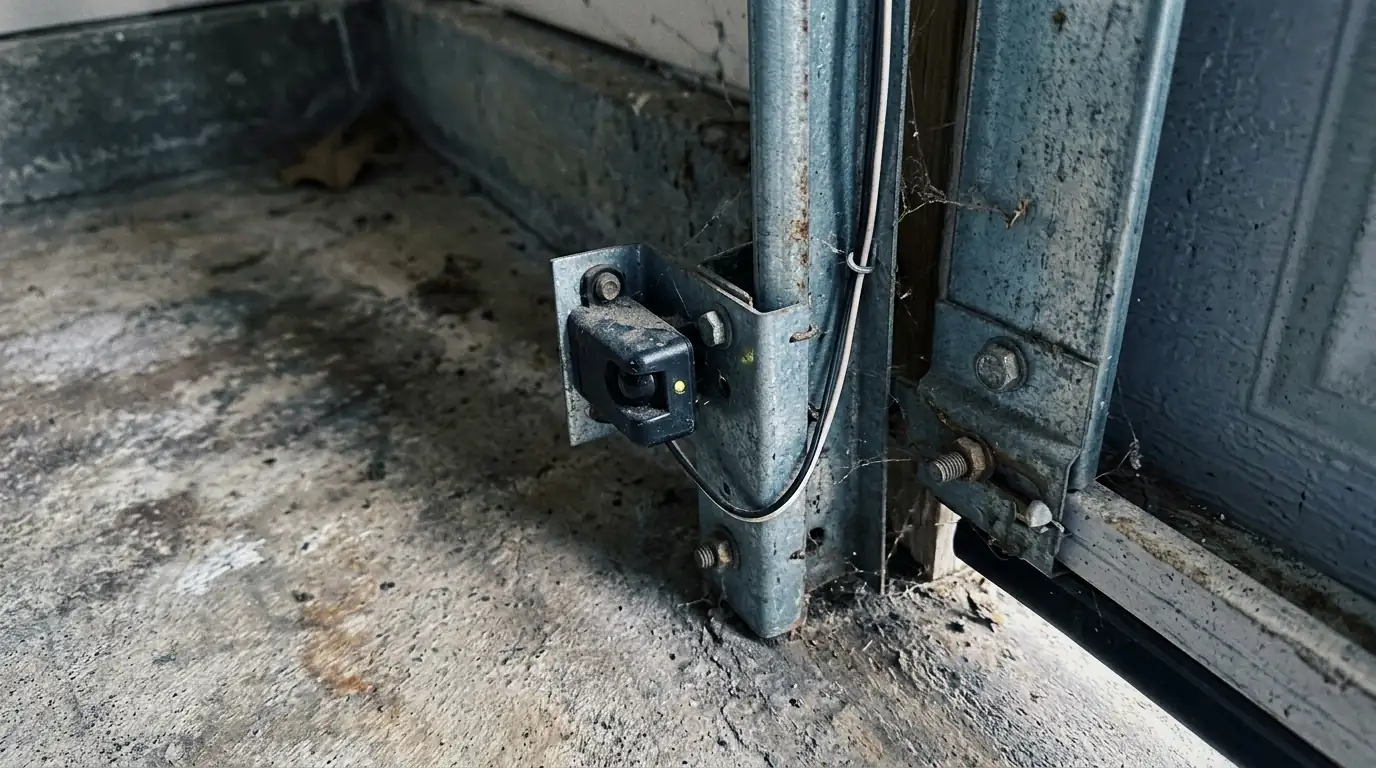
Start the door closing, then wave a broom through the beam path near the floor. The door must reverse immediately, not stop, not hesitate. If it keeps closing, first clean both lenses and realign any kicked bracket until both sensor LEDs hold steady, then retest; a door that still ignores the beam has a wiring or board fault that ends DIY and starts a repair call.
While you are down there, confirm the sensors sit no higher than about six inches off the floor, where they can see a pet or a child's arm, not just an adult's shin.
Test two: contact reversal
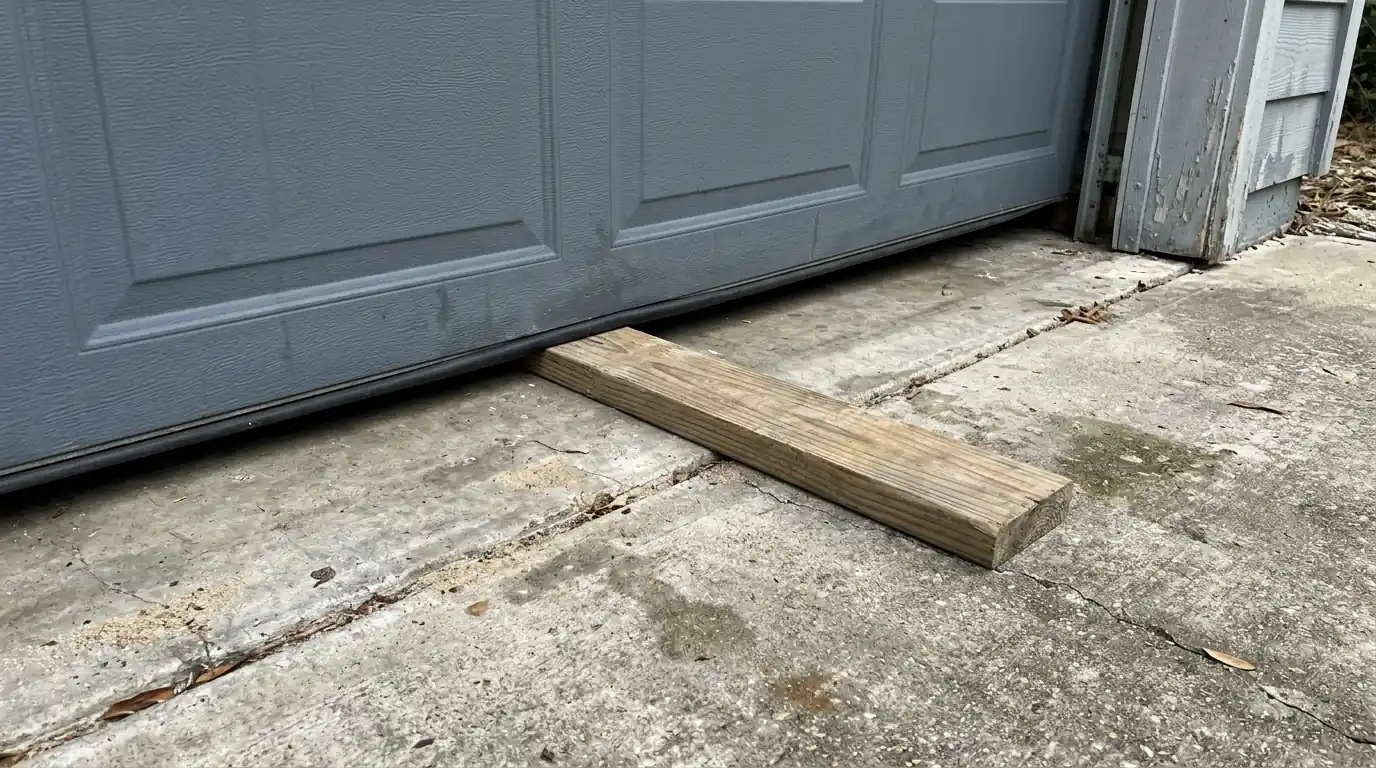
Lay a 2x4 flat on the floor under the center of the opening and close the door. On contact, the door must reverse and return to open; a door that stalls on the board, or worse keeps pressing, has a force or travel adjustment problem, and that same press is what it would apply to a bumper, a bike or a person.
Opener force and travel limits can be adjusted, and small corrections are within a careful owner's reach on many units, but a door that fails this test repeatedly after adjustment is reporting a deeper problem, often binding hardware or a balance fault, which is the cue for test three.
Test three: balance, and what the results mean
With the door closed, pull the manual release and lift by hand: a balanced door rises smoothly with modest effort, holds at waist height, and lowers under control. Heavy, drifting or runaway behavior means the springs no longer carry the door's weight, which stresses the opener, wears every moving part, and fails tests one and two at their root. Reconnect the opener and leave spring work to a professional visit; the tension involved is the one genuinely dangerous zone on the door.
Put the trio on a twice-a-year rhythm, spring and fall, and the door's safety systems get verified more often than most smoke alarms. A door that passes all three is doing everything its engineers promised; a door that fails any one of them has told you exactly what to fix while it is still cheap.
Keep reading
Where to go from here
Tests done, these pages cover the fixes for anything that failed.
Rather just ask a person?
The phone is answered 24/7. Describe the door and get a straight answer and a flat written price, no reading required.