- Home
- Help Center
- Wind-rated doors
Do You Need a Wind-Rated Garage Door in Houston?
By Marvin Driscoll · Garage Door Guides Editor · Updated June 2026 · 7 min read
This is the most geography-dependent question in Houston door buying, and the most oversold. The honest answer depends on which side of a mapped line your address sits, so here is the map, the insurance mechanics, and the cost math, plainly.
In this guide
- Where the line actually runs
- What the designation means in practice
- The wind-speed picture
- Costs and the decision
Questions it does not answer? Call (346) 458-9100, any hour.
Inland Houston: no, not required. The state's designated catastrophe area covers the fourteen coastal counties, Galveston and Brazoria among them, plus Harris County east of Highway 146; inside that line, certified wind-rated doors matter for windstorm insurance through the state pool. Most of Houston proper sits outside it, where rated doors are a voluntary strength upgrade.
Where the line actually runs
The Texas Department of Insurance defines a designated catastrophe area for windstorm purposes: the fourteen first-tier coastal counties, which include Galveston County entirely and Brazoria County, plus the portion of Harris County east of Highway 146. Everything inland of that, which is most of Houston and its western and northern suburbs, sits outside the designated area.
That single fact disarms most wind-door sales pressure inside the Loop: a Heights or Katy address faces no rated-door mandate, and anyone implying otherwise is selling. The area pages state each county's position individually.
What the designation means in practice
Inside the designated area, windstorm coverage through the state's insurer of last resort expects building products, garage doors very much included, to carry a TDI product evaluation and to be documented through the certification process for windstorm inspection. In plain terms: the door must be a certified wind-rated model, installed to its listing, with paperwork your inspector and insurer can file.
A garage door earns special attention in that system because it is the largest opening on most homes: when a door fails in a storm, pressure enters the building and the roof becomes the next casualty. That is engineering, not marketing, and it is why coastal replacements should never be specified casually.

The wind-speed picture
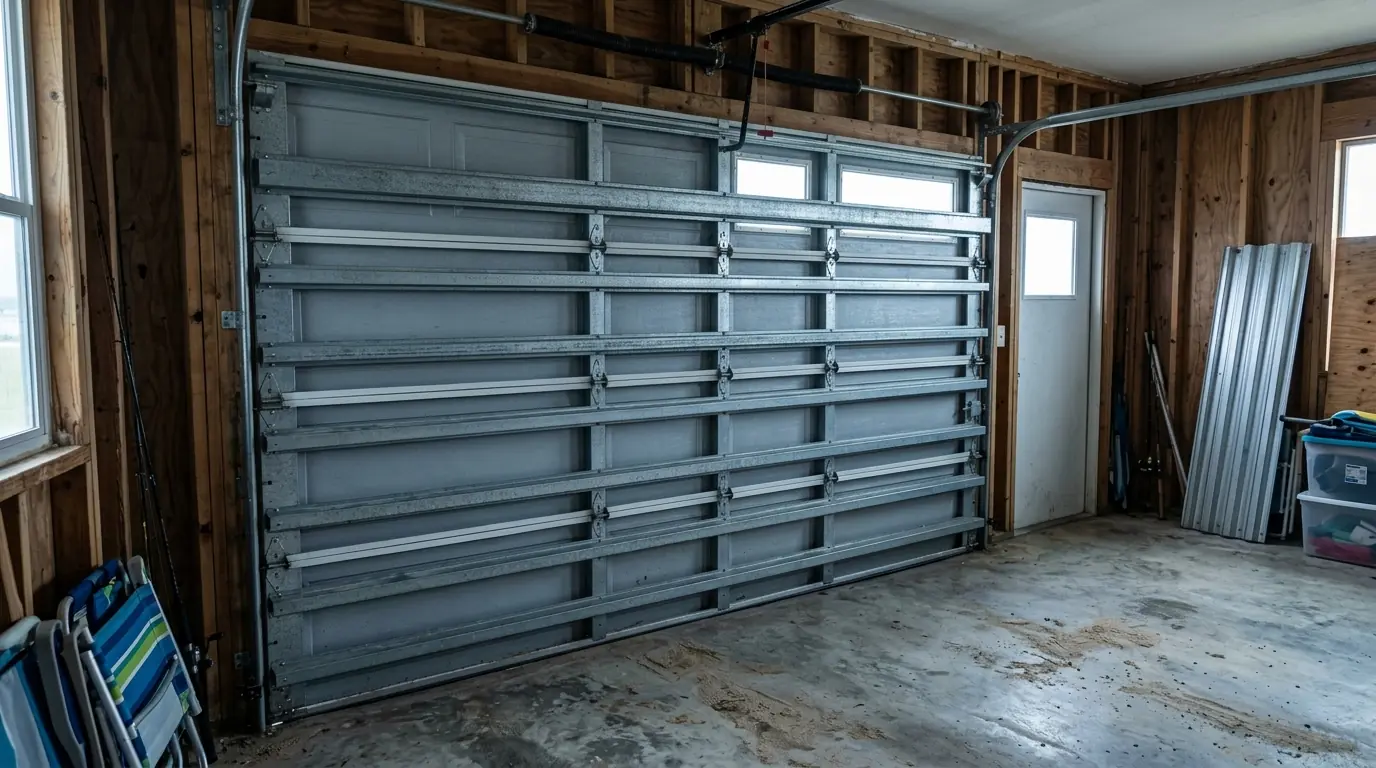
Design wind speeds across the Houston metro run roughly 120 to 140 mph by zone, rising toward the coast. Rated doors are built and labeled for specific design pressures: reinforced struts, heavier gauge skins, upgraded tracks and jamb fasteners, engineered as a system. An unrated door of similar appearance shares none of that math.
Outside the designated area, that strength is a choice, and a defensible one on exposed lots or for owners who remember recent hurricanes from inside the Loop; it simply is not a requirement, and we quote it as the option it is. Our wind-rated door page carries models and current pricing.
Costs and the decision
Expect certified rated doors to carry a meaningful premium over comparable unrated models, the price of the reinforcement and certification, with the gap narrowing on doors that would be heavily built anyway. For a designated-area address the decision is made for you by insurability; inland, weigh the premium against your exposure, your insurer's wind deductible structure and how long you will own the house.
Whichever side of the line you are on, the first step is the same and free: tell us the address. We confirm its designation before quoting, so nobody buys compliance they do not need or skips it where it counts.
Keep reading
Where to go from here
Wind settled, the other Houston climate question is heat, and that one applies to every address.
Rather just ask a person?
The phone is answered 24/7. Describe the door and get a straight answer and a flat written price, no reading required.